Starting solids is a milestone, not a race. Most babies are ready around six months, and the goal at first is simply to explore tastes and textures — milk feeds still do most of the work. Keep the pressure low and let curiosity lead.
Signs your baby may be ready
Every baby develops at their own pace, so watch your child rather than the calendar. Common signs of readiness include:
- Sitting up with little support and holding their head steady.
- Showing interest in your food — watching, reaching or leaning in at mealtimes.
- Being able to move food to the back of the mouth and swallow, rather than pushing it straight back out.
First tastes, low pressure
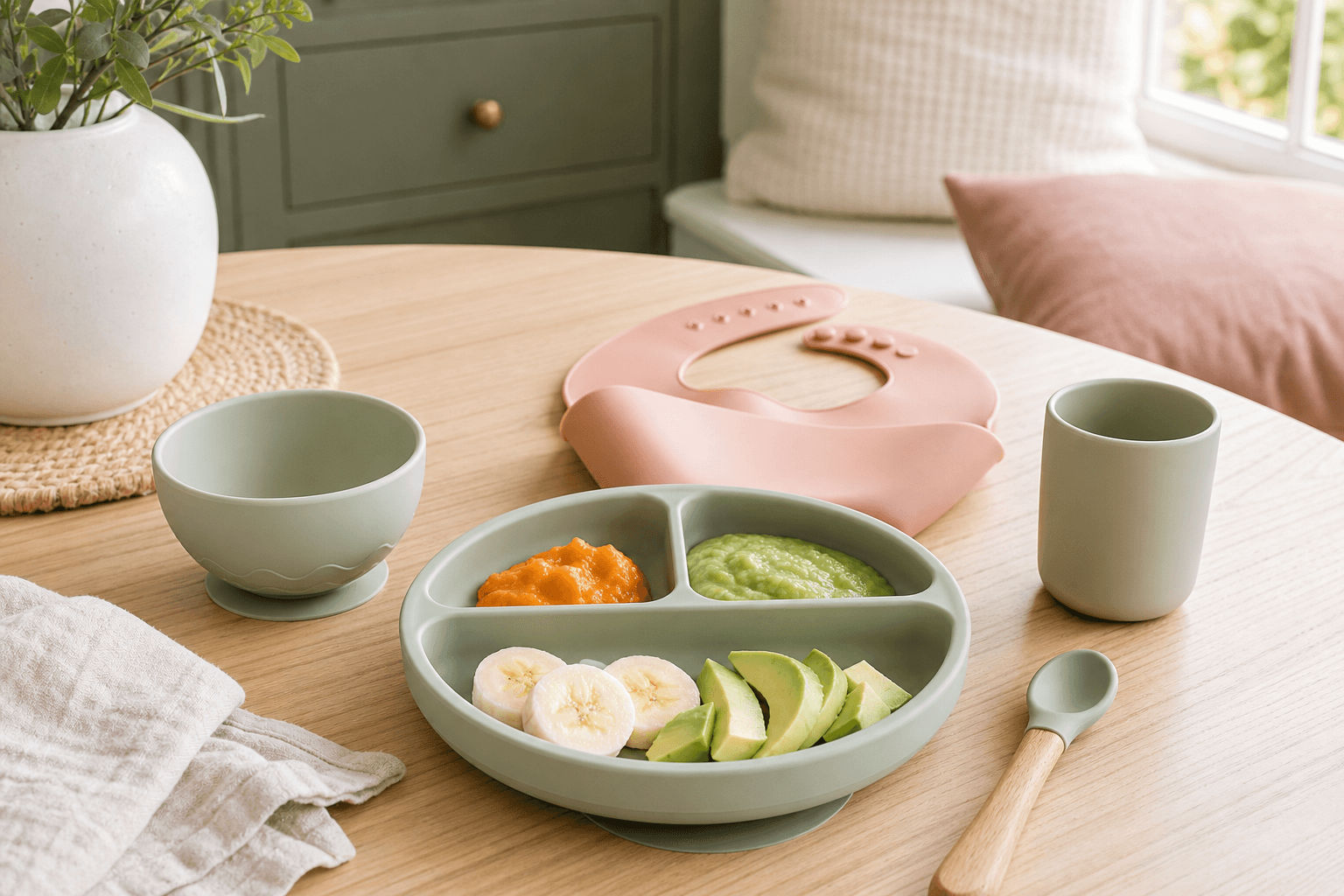
Begin with soft, single-ingredient foods, offered one at a time: well-mashed avocado, ripe banana, softly cooked and mashed yam or plantain, or smooth porridge all make gentle first tastes. Wait a day or two between new foods so you can notice how your baby responds, and keep milk feeds going as usual.
Expect mess — it is part of learning. A bib, a wipe-clean mat and a relaxed face from you go a long way. If a food is refused, simply try again another day; it can take many gentle offers before a new taste is accepted.
Making mealtimes calmer
Offer food when your baby is alert and not too hungry or tired, sit them upright in a secure seat, and keep portions tiny — a spoonful or two is a real start. Eat together when you can; babies learn a great deal from watching you enjoy your own food.
Browse trusted essentials chosen with real family days in mind.